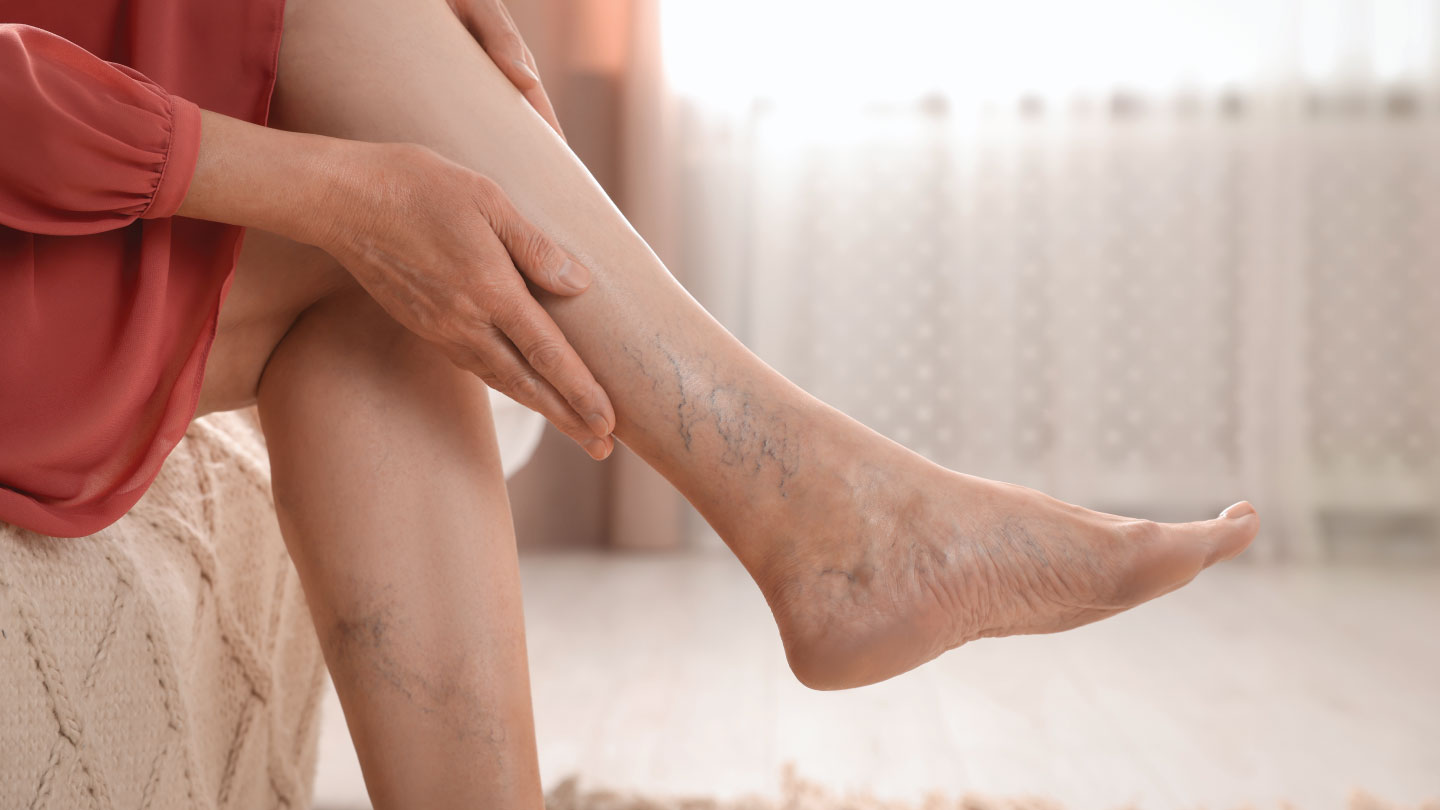
The World Health Organization describes varicose veins as abnormally enlarged superficial veins that become swollen and may take on a twisted or baggy appearance. These are called varicose veins, enlarged veins that develop when blood does not flow efficiently back towards the heart.

Varicose veins develop because of the way blood travels through your legs. Unlike blood flowing from the heart to the rest of the body, blood in the leg veins has to travel upwards against gravity. To make this possible, your veins have tiny one-way valves that open to allow blood to flow towards the heart and close to prevent it from flowing backwards.
When these valves become weakened or damaged, they may not close properly, allowing some blood to flow backwards and pool in the veins. This backward flow, known as venous reflux, increases pressure within the veins. Over time, the veins can become stretched, enlarged, and twisted, leading to varicose veins.
A 2014 review published in Circulation by the American Heart Association explains that venous hypertension, valve incompetence, changes in the vein wall, and calf-muscle pump dysfunction all contribute to the development of varicose veins.
Factors such as age, genetics, pregnancy, prolonged standing or sitting, excess weight, and a sedentary lifestyle can increase the likelihood of developing varicose veins.
Regular, appropriate movement can help in this condition by supporting the calf-muscle pump, encouraging venous return, and relieving symptoms such as heaviness, aching, and swelling.
Here are 3 simple exercises for varicose veins from Dr. Soumya Kasturi, physiotherapist at UR Life Studio, Kavuri Hills. Aim for 10 to 15 repetitions across 3 sets. Start gently and focus on controlled movements rather than speed. If an exercise causes pain, stop and seek advice from a healthcare professional.
1. Heel Raises
How to do it:
- Stand upright facing a wall with your feet hip-width apart. Place both your palms on the wall.
- Slowly raise your heels so you are standing on your toes.
- Pause briefly, then lower your heels back down.
- Repeat in a controlled manner.
Why it helps:
Heel raises activate the calf muscles, helping them contract and squeeze the veins in the lower legs. This supports the calf-muscle pump and encourages blood to move upwards towards the heart.
Related Story: 15-Minute Mobility Routine To Relax Stiff Muscles
2. Legs Up the Wall
How to do it:
- Lie on your back close to a wall.
- Extend your legs upwards so they rest comfortably against the wall.
- Keep your arms relaxed by your sides and breathe normally.
- Stay in this position comfortably before slowly lowering your legs.
Why it helps:
Elevating your legs uses gravity to assist venous return and can help reduce the feeling of heaviness and swelling. Raising the legs whenever possible, particularly helps when symptoms worsen after prolonged standing.
Related Story: Try This One Stretch To Release Stiff Muscles
3. Straight Leg Raise and Ankle Movement
How to do it:
- Lie comfortably on your back with your legs straight.
- Slowly raise one leg, keeping your knee straight.
- While holding the leg up, gently move your ankle by pointing your toes away and then pulling them towards you.
- Lower the leg slowly and repeat on the other side.
Why it helps:
This combines leg movement with ankle pumping, engaging the muscles that assist venous circulation. Regular ankle and foot movements can help activate the calf and foot muscle pumps, particularly when you have been sitting for prolonged periods.
Related Story: 5 Yoga Poses for Stronger Legs
Varicose veins are not simply a surface-level problem. They are linked to how effectively your veins, valves, and leg muscles work together to return blood to the heart.
Along with these exercises, avoid staying in one position for prolonged periods. If your work involves sitting for long hours, take regular movement breaks, walk when possible, and perform gentle ankle movements. If you spend much of the day standing, short periods of walking and leg elevation can also help.
Remember, exercise is a supportive part of managing varicose veins, not a replacement for medical assessment or treatment when needed. Persistent pain, significant swelling, skin changes, ulcers, bleeding, or sudden changes in a leg should be evaluated by a healthcare professional.

Opt for personalised guidance; connect with a UR.Life physiotherapist to understand which exercises are appropriate for you. You can also explore the UR.Life LMTP programme for structured lifestyle and movement support tailored to your health goals.
Sign up for newsletter