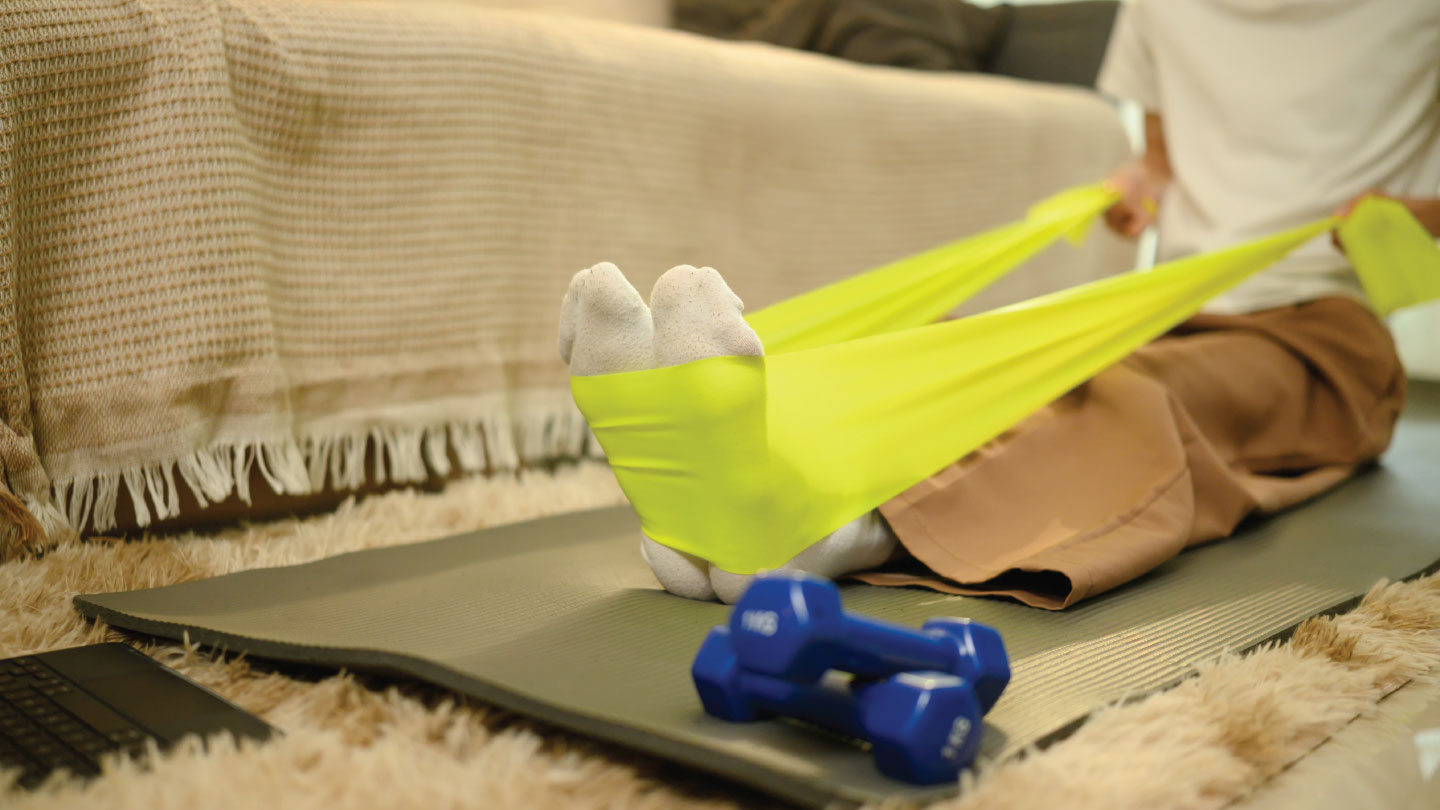
If you live with chronic pain, you probably know the mental calculation that comes before movement. When pain has been around for long enough, avoiding movement can start to feel like the safest option. You sit instead of stand. Take the lift instead of the stairs. Skip the walk. Put off the activity you were looking forward to because you don't want another flare-up.
When something hurts, protecting it feels like the natural response. But staying still isn't always the safest thing you can do for chronic pain. The goal is to find a way to keep moving that respects what your body can currently handle, and then gradually build from there.
Related story: 7 Moves To Relieve Stiffness From Sitting All Day—Full Body Mobility Routine
Pain doesn't always mean you're causing damage
Pain is a protective response, but it isn't a perfect measure of tissue damage. Once pain becomes persistent, the nervous system can become more sensitive to signals associated with threat. Previous painful experiences, stress, sleep and even our expectations about movement can influence how pain feels. That can create a cycle that's surprisingly easy to fall into.
You experience pain while bending, so you stop bending. You avoid lifting because you're worried about your back. You take fewer walks because your knee hurts afterwards. Researchers call one part of this fear-avoidance: becoming afraid that movement will worsen pain or cause damage, and consequently avoiding activities.
A 2019 review published in the Clinical Journal of Pain, involving more than 15,000 participants with chronic musculoskeletal pain, found an association between greater pain-related fear and greater pain intensity and disability. The researchers also noted that the certainty of the evidence was very low, so this does not prove that fear causes disability.
Related story: 15-Minute Mobility Routine To Relax Stiff Muscles
Movement doesn't have to mean pushing through pain
You may have heard “no pain, no gain.” You may also have been told that if something hurts, you should immediately stop. Neither is universally right.
A 2025 systematic review and meta-analysis in the Journal of Orthopaedic & Sports Physical Therapy looked at whether exercise that causes some pain is more or less effective than exercise that remains pain-free for chronic musculoskeletal pain. The review included 16 trials and found no clear difference between painful and non-painful exercise for pain or disability outcomes. But there is an important caveat: the certainty of the evidence was low to very low, and the researchers concluded that the evidence remains unclear.
If an activity repeatedly causes a major flare-up, leaves you struggling to function or produces new symptoms, that's a reason to reassess the activity; not something to simply push through. Sometimes you need less resistance. Sometimes fewer repetitions. Sometimes a shorter walk. Sometimes a different movement altogether.
Related story: A Physio’s Favourite Exercises to Improve Mobility

Start with what you can repeat
One of the easiest mistakes to make is doing too much on a good day. Say you've been avoiding long walks because of knee pain. One morning, you feel better and decide to walk for an hour. By evening, the pain is back. The next day, you barely move. A few days later, you try again. This cycle; overdo it, flare up, stop, restart; makes it hard to build consistency.
A Better Approach: Gradual Progression
Start with an amount of activity that feels manageable. Repeat it. Then slowly increase the duration, resistance, or intensity as your capacity improves. There's no magic number. Ten minutes isn't inherently better than five, and 30 minutes isn't automatically better than 15. The best starting point is the one you can sustain.
Related story: Full-Body Mobility Exercises For Everyone
Movement Doesn't Have to Look Like a Workout
When we hear the word exercise, we often picture a gym, a treadmill, or a carefully structured workout. But movement doesn't have to look like that. It could be walking to the market, gardening, cycling, swimming, doing mobility exercises, or simply getting up regularly during a long workday.
A 2024 position paper from the European Pain Federation (EFIC), published in the European Journal of Pain, draws a useful distinction between physical activity and formal exercise. Physical activity is any voluntary movement that requires energy expenditure, and it can be adapted to different fitness levels and health conditions. You don't have to transform yourself into someone who loves intense workouts. You simply want to keep your body participating in life.
Related story: How to Improve Your Mobility, Posture, & Flexibility
Don't Underestimate Strength
When everyday movements become painful, you may unconsciously start using certain muscles less. Gradually rebuilding strength can make ordinary tasks; standing up, climbing stairs, carrying groceries, or getting in and out of a car; feel more manageable. For chronic low back pain, the WHO recommends structured exercise as part of care, while noting that no single exercise approach has been shown to be clearly superior to others.
You might prefer walking. You might feel better doing strength training. You might enjoy swimming or yoga. You might need a physiotherapist to help you work around a particular limitation.
Related story: Five Ways In Which Strength Training Boosts Your Health

Look Beyond the Pain Score
When you're living with chronic pain, it's tempting to judge every day by one question: How much does it hurt? But pain isn't the only thing worth tracking. Can you walk farther than you could last month? Can you stand long enough to cook dinner? Can you climb the stairs with less hesitation? Can you sit through a meal without constantly shifting positions? Can you return to an activity you've been avoiding?
Chronic pain management isn't necessarily about reaching a day when you wake up and feel absolutely nothing. Sometimes progress looks more like having pain but being less restricted by it.
Related story: Pain Management With Eddie Stern
If you take one thing from this: the goal was never to push through pain at any cost. It's to make movement feel possible again; safely, sustainably, and at a pace that's yours. Start where you are. Move within what you can manage. Pay attention. Adjust when you need to. Build gradually.
Ease discomfort and get back to what you love. Explore physiotherapy and rehab plans designed to support your recovery and mobility.
Sign up for newsletter